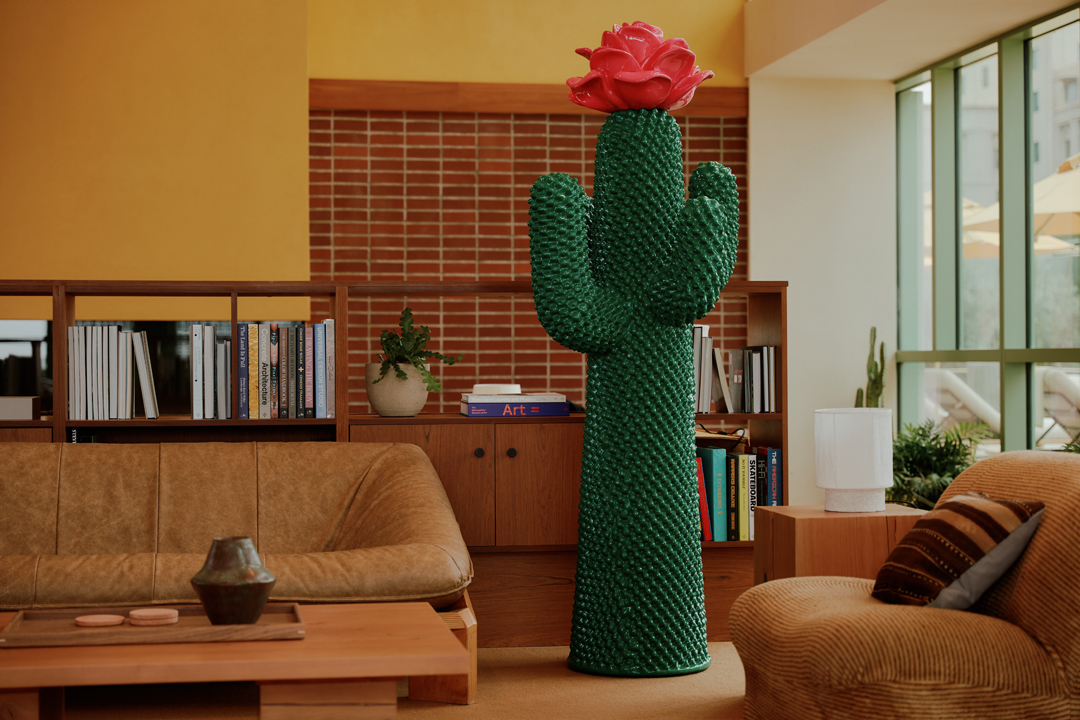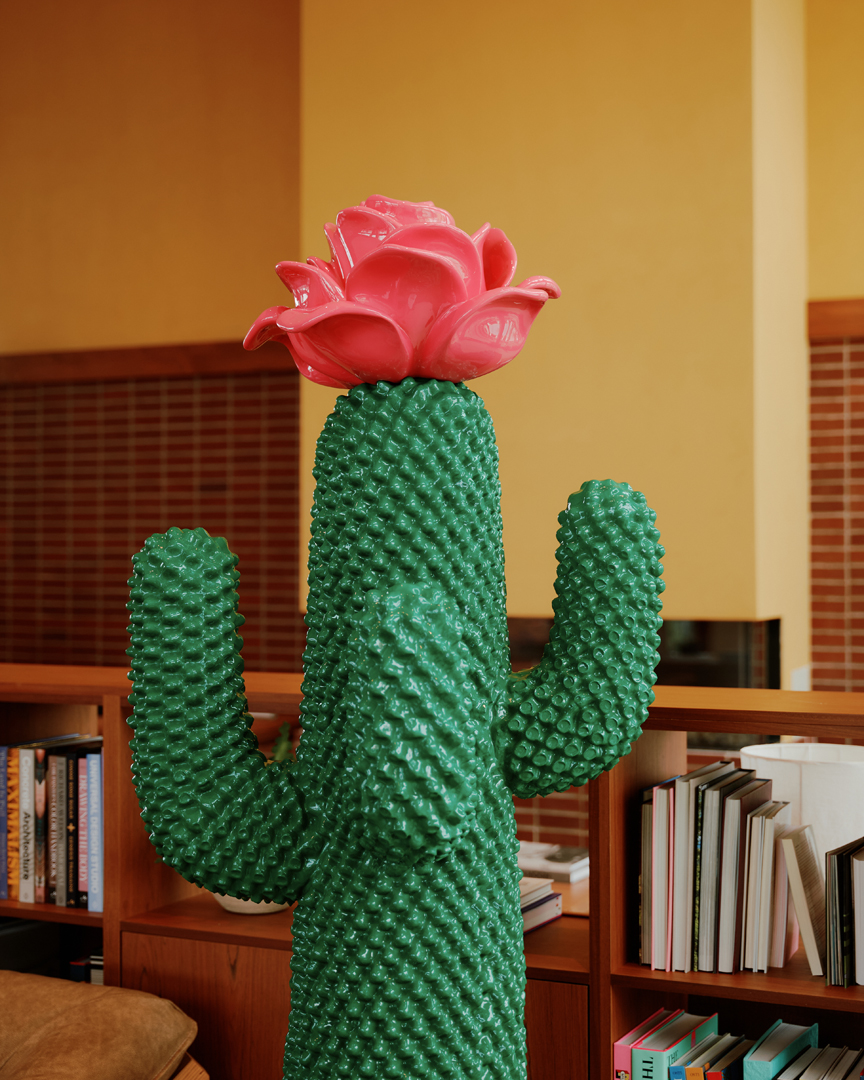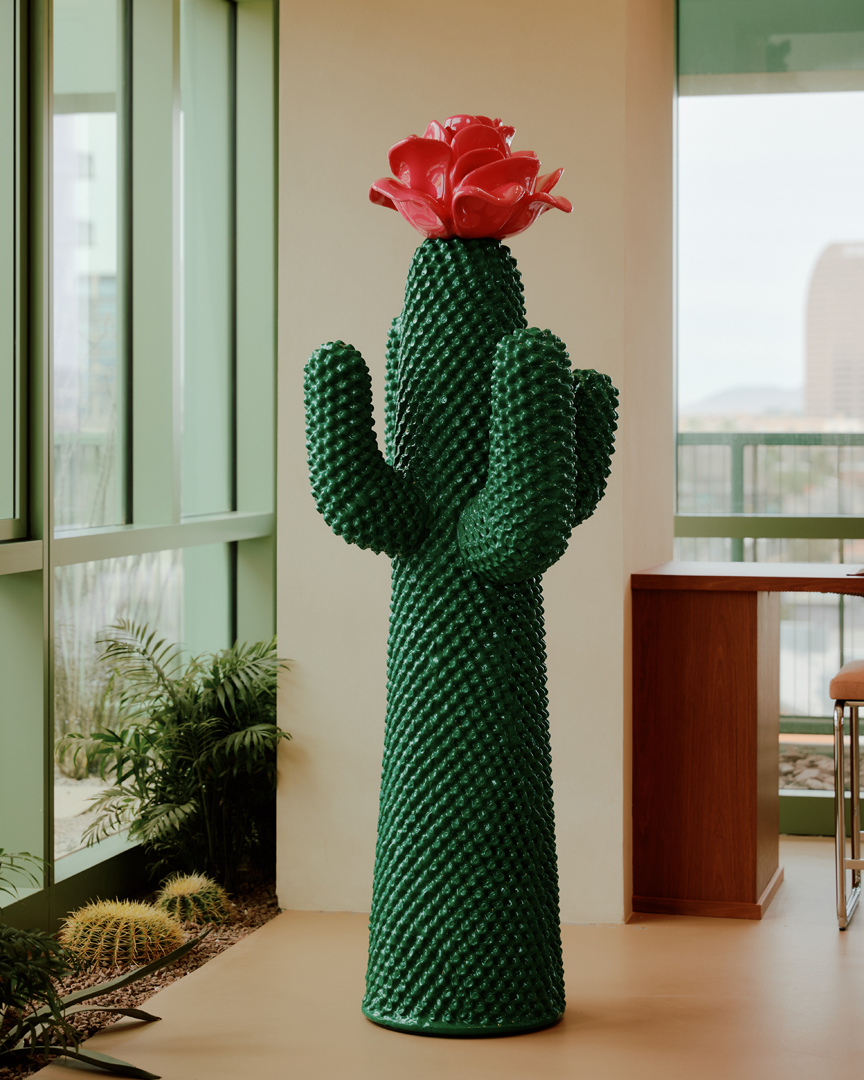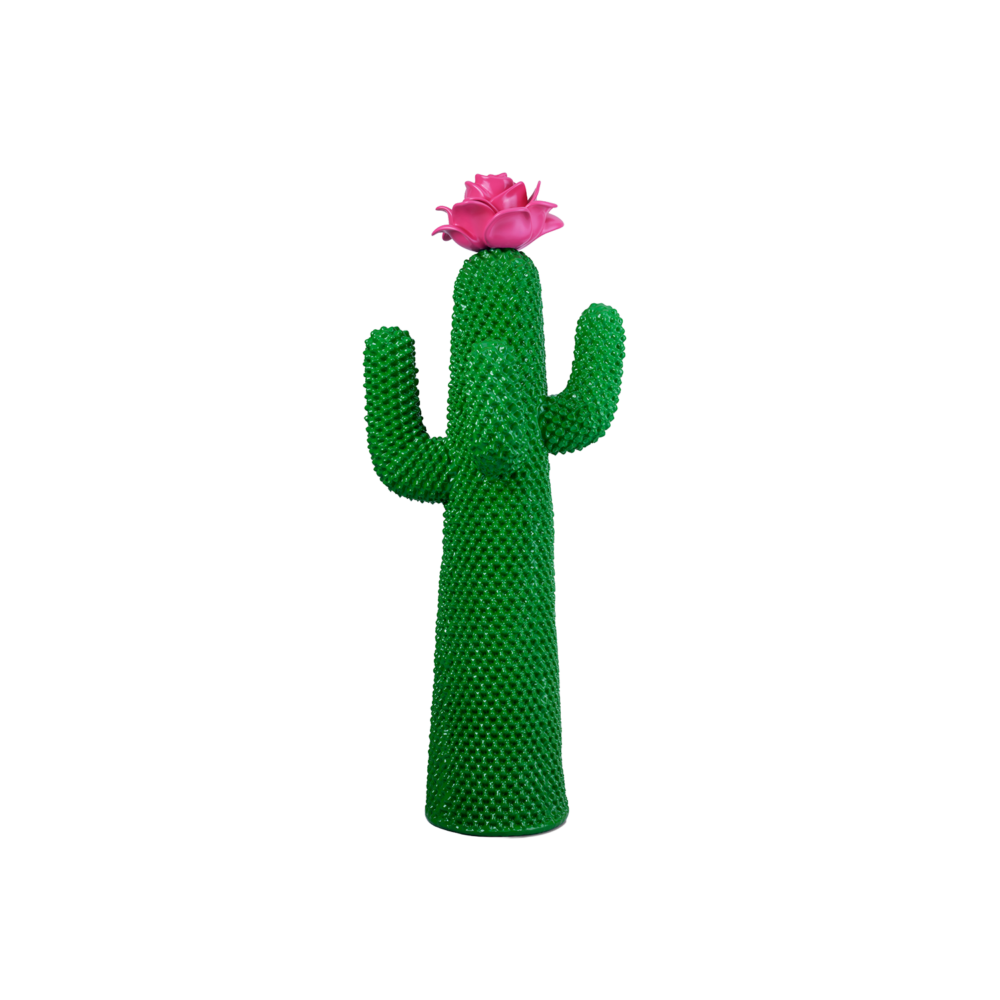
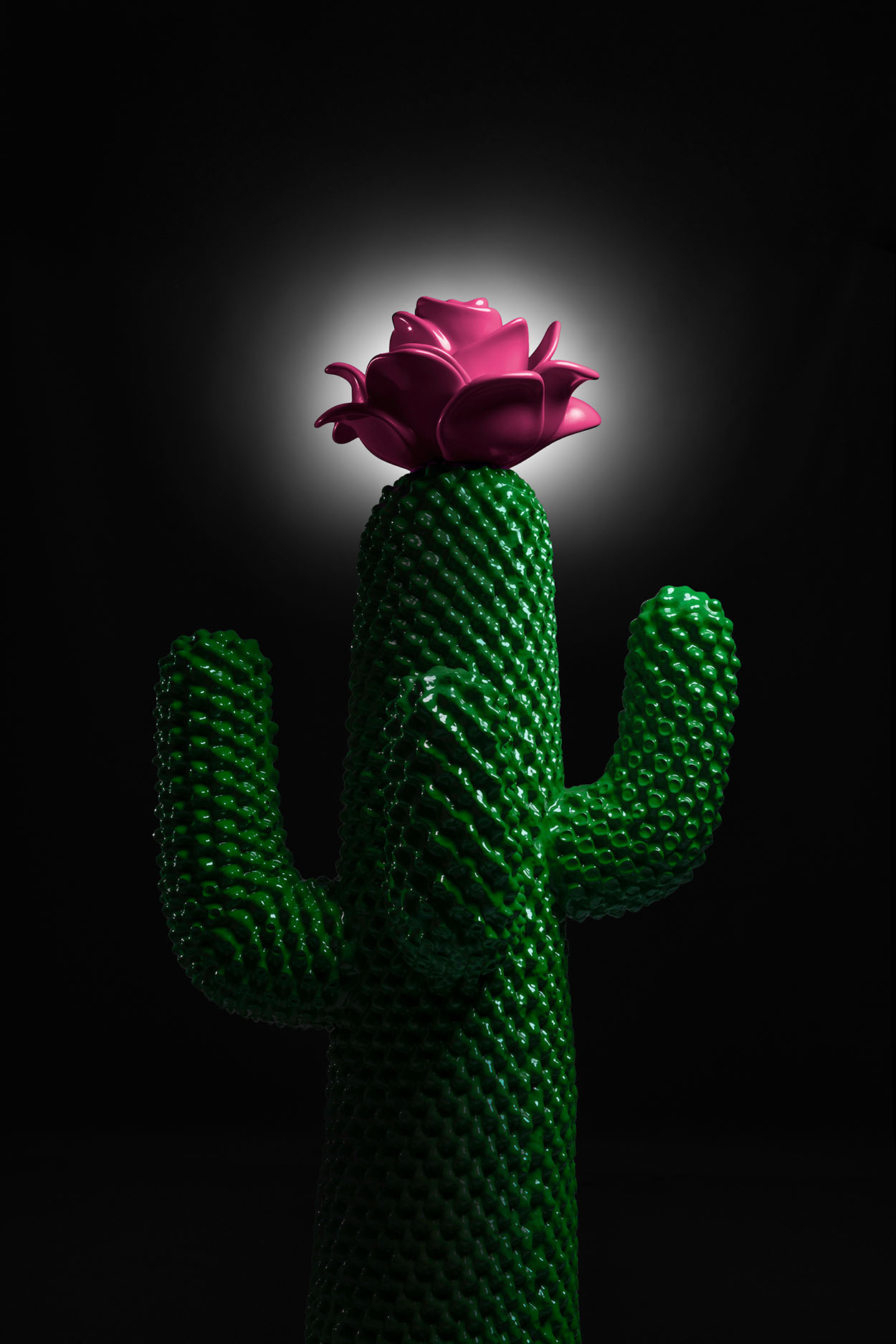
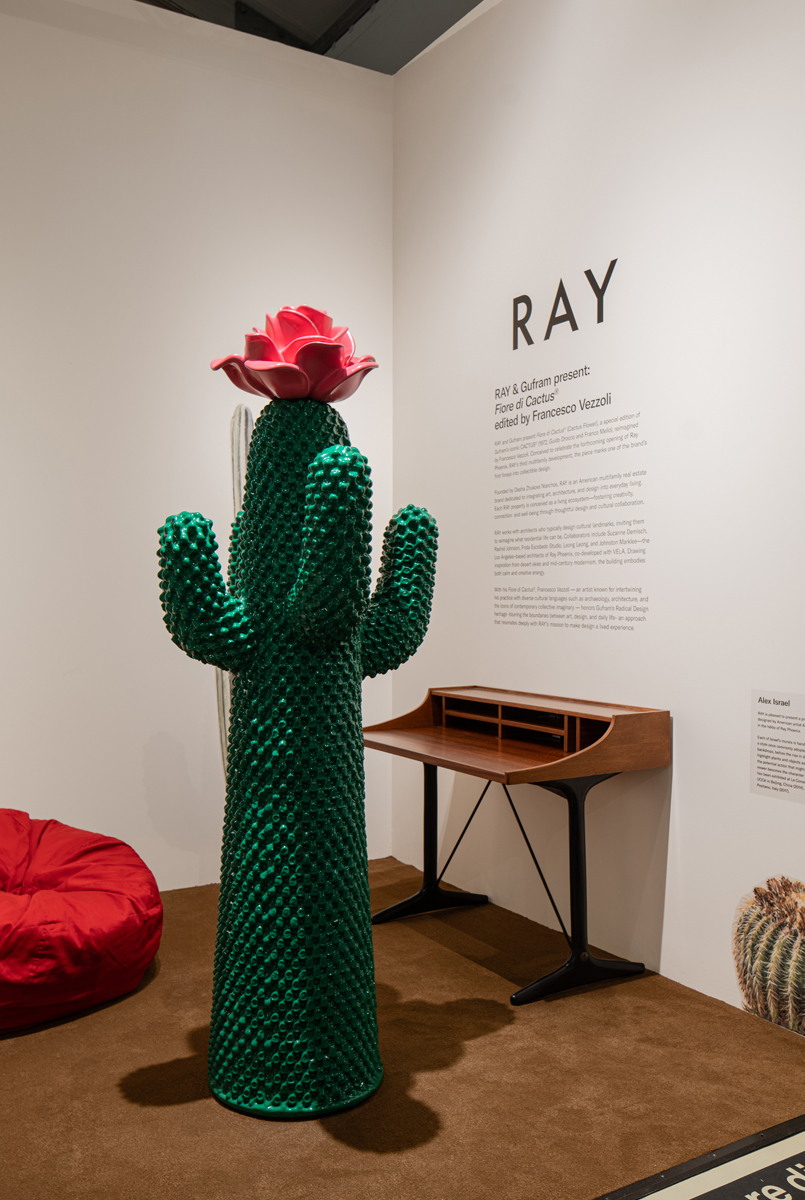
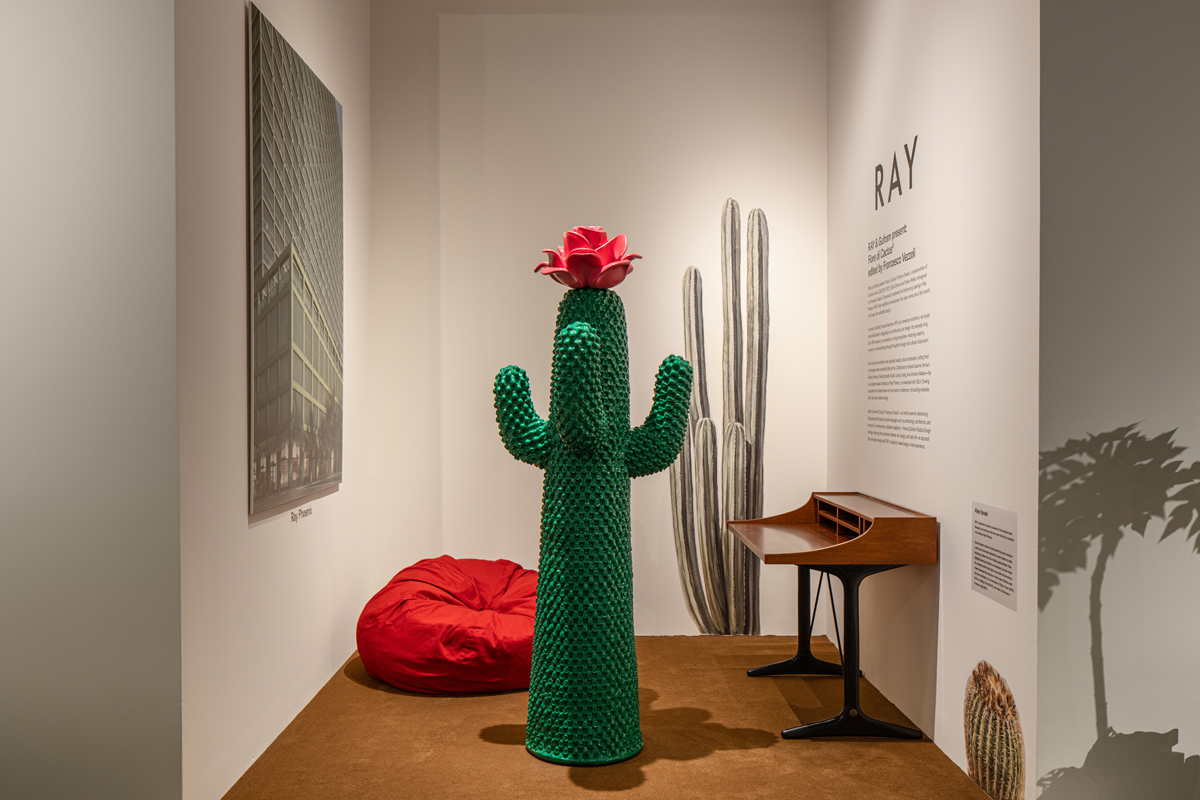
The almost kitsch graphics of the mimetic and uninhibited reality show Comizi di non amore (2004) are filled with glossy, romantic roses, idealized in the public imagination. These same roses blossom in three dimensions, thanks to a masterful conceptual embroidery process, right at the top of Gufram’s timeless coat rack. The historic design brand chose Vezzoli to make the Cactus® “bloom” precisely because of his ability to reinterpret the “pop” aesthetic in a refined and intellectual way, and, most importantly, to view it with a genuine and non-snobbish eye. After all, one of the founding principles of Radical Design—a movement Gufram championed—is to increasingly blur the lines between art, design, and everyday spaces.
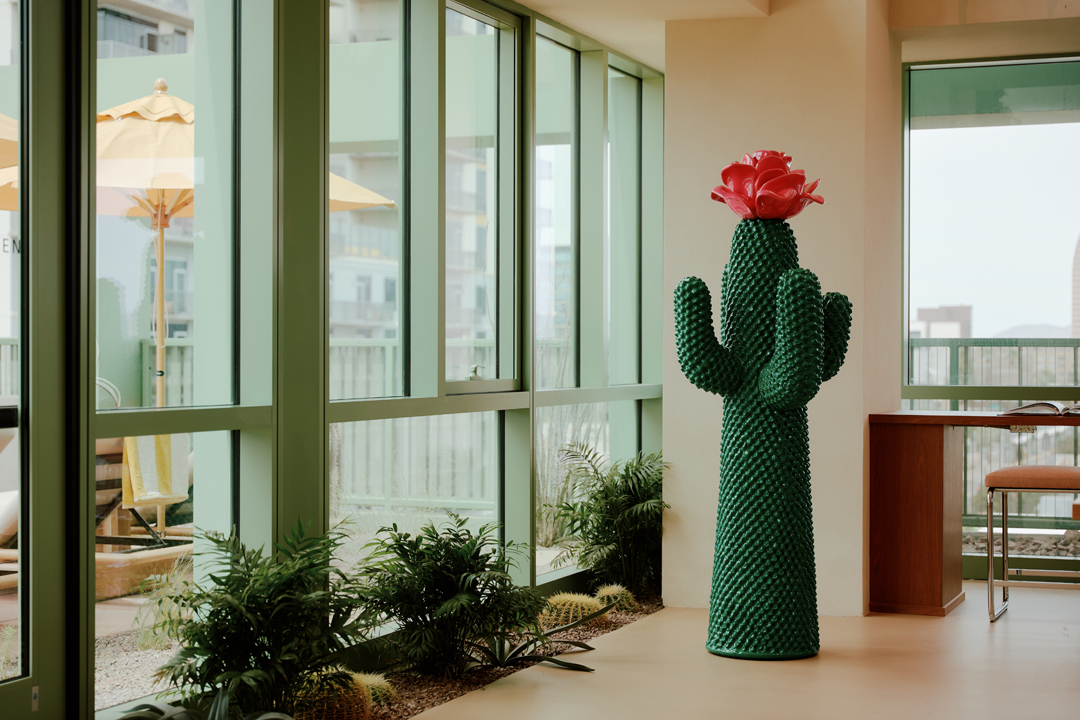
Fiore di Cactus® is an exclusive collaboration that extends beyond Vezzoli’s invaluable artistic contribution. It forms a synergy with Ray, an American platform that promotes and invests in the creation of buildings intersecting art, culture, and a sense of community. Ray meticulously curates every aspect of the project, from architecture to interior design, ensuring that both aesthetics and functionality are always central. Specifically, the artwork originated as a commission from Dasha Zhukova for a Ray project in Phoenix, Arizona. It is within this visionary context that Gufram supplies its iconic Cactus® with Vezzoli’s unmistakable artistic intervention. This particular version, produced as a Special Edition of only 30 pieces, reinforces the concept of the artwork as a design multiple destined for spaces that celebrate the intersection of creative avant-garde and daily life, with Francesco Vezzoli credited as the curator of this edition.